
What is a DM on Social Media? A Founder's Guide to Scaling a SaaS
Discover what is dm on social media and how to use direct messages effectively on X, Instagram, and LinkedIn to grow your brand.
Ever heard someone say "slide into my DMs"? They're talking about a Direct Message, or DM for short. Think of it as a private chat built right into platforms like X (formerly Twitter), Instagram, or LinkedIn.
It's a lot like sending a text, but it happens where your potential customers are already scrolling. While a public post is like shouting into a crowded room, a DM is a quiet, one-on-one conversation.
For a founder, especially in SaaS, this isn't just a feature—it's a distribution channel.
Public Post vs. Direct Message
So, what's the real difference between posting on your feed and sending a private message? Let's break it down from a founder's perspective.
| Feature | Public Post | Direct Message (DM) |
|---|---|---|
| Visibility | Seen by followers, potentially anyone on the platform | Seen only by the sender and recipient(s) |
| Purpose | Brand awareness, broad announcements, public engagement | Lead generation, sales, customer support, networking |
| Interaction | Public comments, likes, shares | Private, direct conversation |
| Lifespan | Can be lost in the feed quickly | Stays in an inbox until deleted |
In short, public posts are for broadcasting your brand. DMs are for building your business.
The Real Power of Direct Messages for Founders
Your public feed is your storefront. It’s polished and designed to catch the eye of anyone passing by. A DM, on the other hand, is the back office where you sit down, have a real conversation, and get business done.
For SaaS founders, this distinction is everything. Public posts are great for brand building, but you're at the mercy of ever-changing algorithms. DMs have become a vital tool for reliable growth and lead generation.
Cutting Through the Noise
Getting noticed on social media is tough. The organic reach for a B2B account on X is incredibly low. You could have 10,000 followers, and only a handful might see your post.
DMs don't have this problem. They land your message directly in a prospect's inbox, guaranteeing delivery. You can read more about this in these social media marketing insights.
A well-crafted DM is the modern equivalent of a perfectly timed sales call, but it’s less intrusive and happens on the prospect's terms. It’s your opportunity to start a dialogue instead of just broadcasting a message.
This one-on-one engagement is the core of social selling. By taking the conversation from a noisy public feed to a quiet, private inbox, you create a space for a genuine connection and can guide the discussion toward how your SaaS solves their problems.
How DMs Work on Key Social Platforms
Every platform treats DMs a little differently. If you're trying to generate leads for your SaaS, you need to know the rules of the road. Sending a DM isn't a one-size-fits-all game.
The whole point is to kick off conversations that turn into demos and sales. To do that, you have to figure out where your ideal customers hang out and are open to a private chat.
Think of it this way: your public posts are like speaking on a stage. DMs are the one-on-one conversations happening backstage where the deals get done.
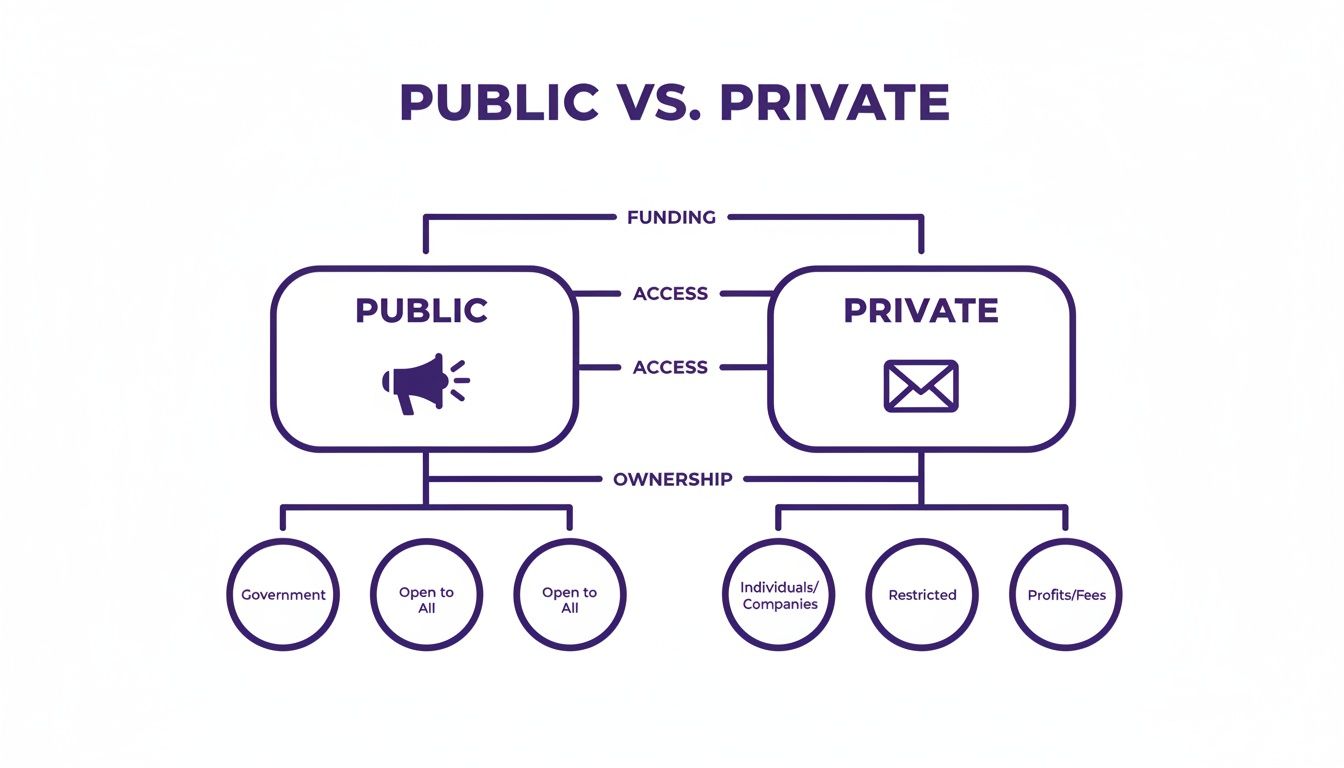
This is what makes DMs so powerful for scaling distribution. You’re taking the conversation from a crowded room into a private office.
A Founder's Guide to Platform DMs
So, where should you focus your energy? Let's break down the major platforms for B2B outreach and see how their DM features stack up for generating SaaS leads.
-
X (formerly Twitter): This is the Wild West for DMs, and that's great for outreach. Its open-door policy means you can message just about anyone, making it a goldmine for finding prospects tweeting about the exact problems your software solves. We have a detailed guide on https://www.dmpro.ai/blog/how-to-send-a-dm-on-twitter.
-
LinkedIn: This is the professional arena. People expect business messages, so there's less fluff. You can message your connections, but reaching non-connections often requires a paid feature like LinkedIn InMail. It’s more formal but can be highly effective for enterprise sales.
-
Instagram: This platform is more casual. DMs often start as a reply to a Story. It’s not the go-to for most B2B SaaS, but it's a solid channel if you're targeting creators, e-commerce founders, or D2C brands.
Choosing Your Go-To Channel for Outreach
For most SaaS founders looking to scale lead generation, X (Twitter) is the undisputed champion for cold outreach. The culture on X is more receptive to connecting with new people, and its real-time feed lets you strike while the iron is hot.
This is where automation becomes a founder's best friend. Instead of manually hunting for prospects and typing out the same "hello" over and over, you can use a tool to do the heavy lifting. For example, DMpro can scan X for users who match your ideal customer profile—based on their bio or recent tweets—and send a personalized icebreaker automatically.
That leaves you to manage conversations with people who are actually interested.
Why Your Business Should Be Using DMs
So, you know what a DM is. But why should you, as a founder, actually care? Think of DMs as a powerful growth channel, especially when your public posts are getting lost in the noise.
Let's face it: your feed is a battlefield. You're competing with thousands of other posts for a tiny sliver of your audience's attention. A DM cuts right through that chaos. It's a direct, private line to your ideal customer.
Cut Through the Clutter
The biggest advantage is simple: you bypass the algorithm. Public feeds are a lottery. This is a huge problem on platforms like X, where engagement rates are notoriously low. You can dig into the data with these X marketing benchmarks.
DMs solve this. Your message gets delivered. End of story. For SaaS distribution, that reliability is everything.
Build Real Relationships
DMs are where one-on-one conversations happen. A public post is like shouting from a stage; a DM is like sitting down for a coffee. This private space lets you build trust in a way public comments never could.
A well-crafted DM is the modern sales letter, but with the power of instant, personal interaction. It’s where you turn a passive follower into an active lead by showing you understand their specific problem.
Here, you can ask meaningful questions, listen to what your prospects need, and offer solutions that feel personal. For founders trying to find product-market fit or scale distribution, these early conversations are pure gold—they lead to closed deals, better products, and loyal customers.
The Unwritten Rules of DM Etiquette
Anyone can send a direct message, but doing it right separates a genuine connection from spam. Think of a cold DM like knocking on someone's office door. If you barge in with a generic, copy-pasted sales pitch, you'll get ignored.
The goal isn't to sell right away; it's to start a real conversation.
The fastest way to fail is to make it obvious you haven't done your homework. A lazy "Hey there" is an instant red flag. Instead, show you've paid attention. Mention a recent post they shared, a common interest from their bio, or a problem they've been talking about.
Key Principles for Effective Outreach
Your first message should either provide value or spark curiosity—not ask for a favor. Forget pitching your SaaS in the first sentence. The focus is on building rapport with a simple, human touch.
Here are the essential do's and don'ts:
- Do Personalize: Go beyond their name. Reference their recent activity, a project they mentioned, or a shared connection. It proves you've put in the effort.
- Don't Send a Wall of Text: Keep the first message short and scannable. A few punchy sentences are all you need to get a reply.
- Do Ask an Open-Ended Question: End with a question that can't be answered with a simple "yes" or "no." This gets a real conversation started.
- Don't Be Vague: Skip "love your work." Get specific. "Your recent thread on scaling SaaS was super insightful, especially your point about..." is a thousand times more effective.
The golden rule of DM etiquette is simple: give before you ask. Offer a piece of advice, share a relevant resource, or compliment a specific achievement. When you lead with generosity, people are much more willing to talk.
This is the principle that powers smart automation. For example, a platform like DMpro is built to send personalized openers at scale by referencing a prospect's recent activity, making outreach feel relevant, not robotic.
How to Scale Your Outreach with DM Automation
Once you start getting replies from manual DMs, you’ll quickly hit a wall. You can't spend all day in your inbox and still build a company. This is where smart automation becomes your secret weapon for scaling SaaS distribution.
<iframe width="100%" style="aspect-ratio: 16 / 9;" src="https://www.youtube.com/embed/CBzsS0yvA-Y" frameborder="0" allow="autoplay; encrypted-media" allowfullscreen></iframe>The goal isn’t to replace human connection. It’s to automate the grunt work—finding and greeting potential customers—so you can focus on conversations with people who are already warmed up.
How Smart Automation Actually Works
Modern tools are a world away from old-school spam bots. Think of them more like a dedicated sales assistant who works 24/7.
For example, a platform like DMpro.ai is built for this. It uses AI to spot ideal prospects based on what they're doing right now—like tweeting about a specific problem. The tool then sends a personalized message that mentions that activity, making your outreach feel timely, not random.
Automation handles the tedious tasks: finding the right people, sending the first message, and tracking replies. This frees you up for the high-value work: building relationships and closing deals.
Keeping the Personal Touch While Scaling Up
Does automation kill the personal feel? Not if you do it right. The key is to automate the start of the conversation, not the whole thing.
Here’s how you keep it human:
- Use Smart Triggers: Send DMs based on actions, like when someone follows a competitor or uses a keyword you’re tracking.
- Personalize Dynamically: Use snippets that pull in their name, company, or a recent tweet to make every message feel unique.
- Take Over After the Reply: The second a prospect writes back, you or your team jump in to manage the conversation.
For businesses looking to really grow their outreach, integrating AI-powered DM support tools like SupportGPT can also help manage incoming replies. To see how this all fits together, check out our guide on automated direct messages on Twitter.
This is how you have hundreds of personal conversations happening at once without burning out.
Alright, let's turn theory into action. Running a successful DM campaign doesn't need to be complicated. It just needs a solid, repeatable system.
The process starts long before you type your first message. It starts with getting crystal clear on who you're trying to reach and what problem you can solve for them. Nail this, and everything else falls into place.
Your Four-Step Campaign Framework
Think about your first campaign in four simple stages. Each step builds on the last, turning a stranger into someone interested in what you have to say.
-
Define Your Ideal Prospect: Get really specific. What’s their job title? What industry? Most importantly, what problems are they complaining about online that your SaaS solves? On X, this could be spotting someone asking for tool recommendations in your niche.
-
Craft Your Opening Message: Your first DM should be short, personal, and about them—not you. A great opener mentions something they recently posted and ends with a simple question. Forget the sales pitch. Your only job is to start a conversation. If you're stuck, you can find high-converting DM templates that are easy to customize.
-
Find and Qualify Leads: Manually scrolling through social media for hours is a huge waste of time. You need to find active people who fit your ideal profile. This is where automation is a lifesaver. Tools like DMpro can handle this entire discovery process for you, finding qualified people based on keywords and recent activity.
-
Nurture the Conversation: When someone replies, the real work begins. Your goal is to listen, ask smart questions, and gently steer the chat toward a demo. The secret is to offer value and build trust before you ever ask for a sale.
Following this framework gives you a reliable process for turning a simple DM into a powerful tool for growing your business.
DM FAQs: Your Top Questions Answered
Is It Really Okay to DM Someone I Don't Know?
Absolutely, but you have to be smart about it. Think of it like introducing yourself at a networking event, not making a cold call. Your message should feel personal and show you've done your homework. Offer something useful or interesting right away, rather than jumping into a sales pitch. The goal is to open a door to a conversation.
How Many DMs Can I Realistically Send in a Day?
This is a classic quality vs. quantity debate. If you're writing each message yourself, aim for 10-20 highly personalized DMs a day. You'll get much better results. If you're using an automation tool like DMpro, you can send more, but the key is still sharp targeting. Sending a thousand generic messages is a fast track to getting flagged as spam.
What's the Best Way to Follow Up if I Don't Get a Reply?
Give it a few days. When you follow up, avoid the dreaded "Just checking in." Instead, add more value. Share a link to an article you thought they'd like or ask a thoughtful question about a recent post they made. Keep it light, helpful, and never pushy.
If you’re tired of manually sending DMs every day, try DMpro.ai — it automates outreach and replies while you sleep.
Ready to Automate Your Twitter Outreach?
Start sending personalized DMs at scale and grow your business on autopilot.
Get Started Free